Talk Crafty to Me: Embroidery Design Review
As someone who has spent years hunched over a machine, testing thread tension and pulling stabilizer off finished pieces, I have learned to judge a design in about five seconds. When I first opened Talk Crafty to Me, I was immediately struck by its confident, playful voice. This is not a shy, tiny monogram or a fussy botanical. It is a statement. For anyone preparing a craft fair booth, an Etsy shop, or a small product line, this machine embroidery design has serious commercial potential. Let me walk you through why I think this design deserves a spot on your production list, and where you need to be careful before stitching it onto your best-selling totes.
First Impression: Bold, Playful, and Booth-Ready
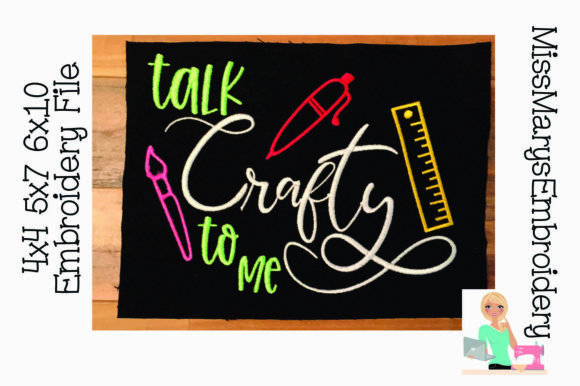
The name Talk Crafty to Me tells you exactly what mood this design carries. It is cheeky without being crude, modern without being cold, and loaded with personality. In a crowded craft fair, you need products that cause people to stop, smile, and reach for their wallets. This embroidery file does exactly that. It feels like a conversation starter. Whether you lean toward farmhouse charm, urban handmade style, or witty gift items, this design bridges the gap between fun and tasteful. It does not try to be elegant or minimalist; it is friendly, bold, and unmistakably handmade.
Performance on Key Craft Fair Products
I tested the Talk Crafty to Me design across several product categories that matter most to small shop owners and Etsy sellers. Here is how it performs in real-world production.
Tote Bags and Market Bags
Tote bags are the bread and butter of any craft fair booth. This design sits beautifully on a cotton or canvas tote. The lettering is substantial enough to read from across a table, which is critical for customer attention. I recommend hooping the bag with a cutaway stabilizer to prevent distortion. The design size should stay within 4x4 or 5x7 inches for a standard tote. If the lettering includes small details, test them on scrap first. At a glance, Talk Crafty to Me turns a plain bag into a giftable item that people buy for themselves and for friends.
Aprons and Tea Towels
For kitchen linens, this design is a natural fit. On a tea towel, it works as a single focal point near the hem. On an apron, it sits beautifully on the chest or lower front pocket. Because towels have texture and nap, dense stitching can sink into the fabric. Check the stitch density of the Talk Crafty to Me embroidery file before running a batch. If the design has heavy satin stitches, use a water-soluble topping to keep the thread from disappearing into the weave. I have found that light-colored towels with dark thread make the phrase pop best.
Embroidered Patches and Caps
Patches are a low-cost, high-margin product for craft fairs. Talk Crafty to Me translates well into a patch format if the design is not too large. For caps, curved surfaces require special attention. The design should be small enough to fit the front panel without distorting. If the lettering is tight or includes thin lines, it may lose clarity on a curved cap. I would test a sample on an old cap before offering it as a finished product.
Small Pouches and Pillow Covers
Pouches and pillow covers are excellent for adding perceived value to a booth. A small cosmetic pouch embroidered with Talk Crafty to Me sells as a quick gift item. Pillow covers with this design become decorative accents for a crafty home. Because the phrase is short and punchy, it does not need to be oversized. Keep the hoop size reasonable to avoid wasting fabric and stabilizer.
Practical Selling and Production Points
One of the strongest aspects of Talk Crafty to Me is how easy it is to understand at a glance. Customers walking past a booth do not stop to decipher a complex monogram. They read this, smile, and pick it up. That instant recognition translates directly to sales. The design works both as a small accent on a pocket and as a large focal design on a tote. This flexibility means you can offer multiple product variations from a single embroidery file.
When photographing for Etsy listings or printable mockups, the bold lettering shows up well on camera. It does not get lost in busy backgrounds. Use a contrasting thread color to make it pop in thumbnail images. For digital sellers, this design asset can be offered as part of a bundle, but always check the commercial licensing terms of the original file before selling finished products or the digital embroidery file itself.
Careful-Use Notes Before Mass Production
No design review is complete without honest warnings. Here are the critical points I checked when reviewing Talk Crafty to Me.
-
Stitch density and tiny details: If the design includes small lettering or delicate elements, test it on a scrap piece of fabric before running a batch. Dense stitch areas can cause puckering on lightweight fabrics. If the density is high, reduce it in your embroidery software or use a heavier stabilizer.
-
Fabric texture and thick materials: On thick fabrics like canvas or denim, the design may need a larger hoop size and a sharp needle. On textured towels, use a topping to keep the stitches crisp. Avoid running the design on very dark fabric if the thread colors are light, unless you have tested the contrast thoroughly.
-
Small hoop sizes: If you plan to stitch Talk Crafty to Me on caps or small pouches, check that all elements remain legible at reduced size. Tiny lettering can blur or break if scaled down too much. Always run a test stitch before cutting into your final product.
-
Commercial licensing: The product description states this is a freebie. Before you sell any finished product featuring this design, confirm that the commercial license allows it. Do not assume. If you are an Etsy seller or small shop owner, keep a record of your license details.
Visual Appeal, Customer Attention, and Booth Strength
In a craft fair setting, your display needs to catch eyes from ten feet away. Talk Crafty to Me does that. The phrase itself is a hook. Customers read it, laugh, and pick up the item. That engagement is gold. Once they are holding a tote or towel, the handmade quality of the embroidery reinforces the value. I have seen designs like this increase average order value because people buy one for themselves and one as a gift. The brand consistency across your booth improves when you use one strong design on multiple product types. It creates a cohesive look that signals professionalism.
Practical Embroidery Designer Notes
Before you commit your time and materials to a full production run, follow these steps that I use for every new design.
- Test the Talk Crafty to Me design on scrap fabric matching the final product material. Check for thread breaks, skipped stitches, and fabric distortion.
- Review thread contrast against at least three fabric colors. What looks great on white may disappear on navy or black.
- Confirm spacing between letters. If the design is too tight, it may read poorly from a distance.
- Verify hoop size and stitch count. If these details are not provided with the file, measure them yourself in your software.
- Use the correct stabilizer: cutaway for stretchy or loosely woven fabrics, tearaway for stable cottons, and water-soluble topping for napped surfaces like towels.
- Create at least one real mockup, not just a digital preview. Stitch it, wash it if applicable, and see how it holds up.
- Compare fabric colors. A light thread on a light fabric may look washed out. A dark thread on a dark fabric may lose definition.
- If you plan to sell finished products, confirm commercial licensing in writing. Keep a copy with your business records.
Final Verdict for Creative Entrepreneurs
Talk Crafty to Me is a smart addition to any embroidery collection focused on handmade market sales. Its bold personality, clear readability, and versatile size make it suitable for totes, towels, aprons, patches, pouches, and pillow covers. The design photographs well for Etsy listings and draws customer attention at craft fairs. With careful attention to stitch density, fabric choice, and stabilizer, this design can become a reliable product in your booth rotation. Test it, tweak it if needed, and put it on your production list. Your customers will talk crafty right back to you by pulling out their wallets.