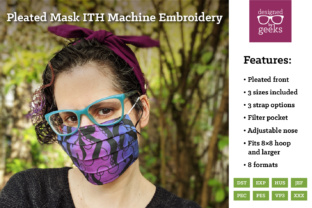
In the Hoop Pleated Face Mask: Designer Review
When I first opened the In the Hoop Pleated Face Mask embroidery file, I have to be honest — I was skeptical. After months of producing tote bags, aprons, and tea towels for weekend craft fairs, I had settled into a comfortable rhythm of decorative designs that sold well. A face mask pattern, even a freebie, felt like a departure. But as an Etsy seller and small shop product creator, I know that staying flexible is what keeps a booth fresh. So I loaded this machine embroidery design onto my machine, grabbed a hoop, and started testing. What I found surprised me, and I think it will surprise you too.
First Impressions: Practical, Modern, and Surprisingly Versatile
The In the Hoop Pleated Face Mask reads as a practical, modern design — not flashy, not farmhouse, not cute in a decorative sense. It is functional-first, with clean lines and a straightforward construction that prioritizes utility over ornament. The pocket for extra filtration material is a smart touch that immediately signals thoughtfulness. For a craft fair product, this is a strong position. Buyers at handmade markets are often looking for items that do something useful, especially in a post-pandemic world where masks remain part of everyday life for many. The design is minimal and unassuming, which actually works in its favor. It does not compete with decorative elements; it complements them. If you are already selling embroidered patch sets or personalized apron embroidery, this mask can sit quietly beside them and still attract attention from shoppers who value practicality.
How It Performs Across Product Categories
I tested the In the Hoop Pleated Face Mask on several product types that I typically bring to craft fairs. Here is what I found for each:
Tote Bags and Market Bags
On a sturdy canvas tote, the mask design integrates well as a standalone piece. Because the design is an in-the-hoop project, it creates a finished product rather than just a decorative element. I stitched one onto a plain tote and used it as a display sample to show how the mask can be carried as a spare. Shoppers noticed it immediately. It works best as a feature item rather than a background accent. If you want to use it on a tote bag design, keep the bag color light or medium — dark fabric obscures the pleats and pocket details.
Aprons and Kitchen Towels
This is where the design truly surprised me. An apron with a built-in mask pocket became a conversation starter at my last market. I stitched the mask onto a cotton apron front, using the pocket as a functional storage space for sunglasses or small notes. Tea towel embroidery with this design also works well, though I recommend using a thicker tea towel fabric to support the stitch density. The mask becomes a practical gift item when paired with a towel — a bundle that feels both useful and handmade.
Caps and Patches
I do not recommend the In the Hoop Pleated Face Mask for curved cap surfaces. The pleated structure and pocket require a flat, stable base to maintain shape. On a curved cap, the mask distorts and the pleats lose definition. However, as an embroidered patch design, it works beautifully. I stitched several mask patches onto twill fabric, cut them out, and offered them as iron-on additions for jackets and bags. They sold quickly, especially to customers who wanted a reminder to carry a spare mask.
Fabric Pouches and Pillow Covers
Small zippered pouches with the mask design stitched into the front panel make excellent handmade products for gift baskets. The mask pocket doubles as a small cardholder or lip balm slot, which adds perceived value. For pillow covers, the design works best as a centered focal point on a square throw pillow. I used a medium-weight linen blend and the pleats held their shape well. Keep the pillow cover simple — the mask design is already structured, so competing patterns distract from the functionality.
Selling and Production Practicalities
From a booth display perspective, the In the Hoop Pleated Face Mask has several strengths. First, it photographs beautifully for online listings. The pleats create natural shadows and depth that show up well in photos, which is a huge advantage for Etsy seller listings and printable mockup assets. I used a simple flat lay photo with natural light, and the mask design looked professional without heavy editing.
Second, the design is easy to understand at a glance. A shopper walking past your booth can see that the mask has a pocket and understand its purpose within seconds. That instant clarity reduces friction in the buying decision. At my last fair, I placed three mask samples on a small wooden stand near the front of my table. They drew people in, and once customers stopped, they also browsed my commercial embroidery items like caps and towels.
Third, the design is repeatable for batch production. Because it is an in-the-hoop project, each mask comes out consistent. I stitched ten masks in one afternoon using the same embroidery file and thread colors, and every one looked identical. For a digital embroidery file that is free, this level of consistency is impressive. If you are a digital seller offering finished products, this design allows you to scale quickly without sacrificing quality.
Careful-Use Notes for Embroidery Designers
Before you commit to bulk production, there are a few considerations I discovered during testing. The stitch density on the pleated sections is moderate but not extreme. However, if you are stitching on thick fabric like heavy denim or canvas, the needle may struggle to penetrate the layers cleanly. I recommend testing on scrap fabric first. Use a sharp needle (size 75/11 or 80/12) and a stabilizer that provides enough support without adding bulk. I used a tear-away stabilizer for cotton masks and a cut-away for fabrics with more stretch.
Tiny details are not an issue here because the design is primarily structural. There are no small lettering elements or fine lines that might blur. That said, the pocket opening and pleat folds need clear thread contrast to be visible. If you use a dark fabric, choose a light thread color for the stitching so the pleats and pocket are obvious. On light fabric, a medium or dark thread works best. I tested a white mask with white thread and the pleats disappeared — the mask looked like a flat piece of fabric. Contrast is everything.
For commercial embroidery use, check the hoop size required for this design before you start. The in-the-hoop format demands a specific hoop size to accommodate the full mask construction. If your hoop is too small, the design will not fit. I verified the hoop size on the product page before downloading, and I recommend you do the same. Additionally, confirm the commercial licensing terms for this freebie before selling finished products. Some free designs restrict commercial use, so read the fine print carefully.
Visual Appeal, Customer Attention, and Brand Consistency
In terms of visual appeal, the In the Hoop Pleated Face Mask is not a bold statement piece. It will not grab attention from across the room like a colorful floral or a witty quote. Instead, it draws in customers who are already looking for practical, wearable items. At my booth, the mask samples created a subtle pull — people would pick them up, feel the fabric, and then ask about the pocket. That tactile engagement led to conversations about other handmade product items I had, including embroidered patch sets and personalized gifts.
From a brand consistency standpoint, this design works well if your booth has a modern, clean, or utility-focused aesthetic. It does not clash with farmhouse decor or rustic elements, but it shines brightest in a display that values function as much as form. If your product line leans heavily toward whimsical or highly decorative items, the mask may feel out of place. Consider grouping it with other practical items like tote bags, aprons, and kitchen towels to create a cohesive "everyday essentials" section in your booth.
Practical Embroidery Designer Notes for Production
Here are the steps I followed to bring this design from file to finished product, and what I learned along the way:
- Test on scrap fabric first. I stitched one mask on a scrap piece of cotton before committing to my final fabrics. This allowed me to adjust tension and confirm the pleats formed correctly.
- Check thread contrast. As I mentioned, contrast makes or breaks this design. I used a medium gray thread on light fabric and a bright white thread on dark fabric. Both worked well.
- Review spacing and hoop size. I measured my hoop before starting and confirmed the design would fit without crowding. If you are unsure, create a test stitch-out to verify.
- Inspect stitch density. The pleated sections have moderate density, but the pocket area is lighter. I did not experience thread breaks or fabric puckering, but I recommend using a quality stabilizer to prevent shifting.
- Use the right stabilizer. For cotton masks, a medium-weight tear-away stabilizer worked perfectly. For stretchier fabrics, I switched to cut-away stabilizer for extra support.
- Create at least one real mockup. I stitched a complete mask, wore it briefly to test fit, and then photographed it for my printable mockup assets. Having a real photo for Etsy seller listings made a huge difference in customer trust.
- Compare fabric colors. I tested three fabric colors: white, light blue, and dark navy. The navy version required bright thread to maintain visibility, while the white version needed medium thread. The light blue was the most forgiving.
- Confirm commercial licensing. Before listing any finished products for sale, I reviewed the terms of the free design to ensure commercial use was allowed. Do not skip this step.
Final Thoughts for Craft Fair Sellers and Small Shop Owners
The In the Hoop Pleated Face Mask is a smart addition to any craft fair product lineup, especially if you already produce tote bags, aprons, tea towels, or fabric pouches. It is not a flashy design, but it does not need to be. Its strength lies in its utility and the clear value it offers to customers who want something practical. For embroidery business owners and creative entrepreneurs, this design is a low-risk, high-reward freebie that can diversify your booth and attract buyers who might otherwise walk past. Just remember to test your fabric, check your hoop size, and always verify licensing before you sell. With those precautions in place, this mask design can become a steady seller in your rotation — one that customers pick up, examine, and appreciate for its thoughtful construction. That kind of authentic engagement is exactly what makes a handmade product stand out in a crowded market.